
If you are launching an activewear brand or placing your first manufacturing order, the fabric decision is the single most important choice you will make. Get it right and your customers feel the quality immediately. Get it wrong and no amount of branding or marketing will save you from returns, bad reviews, and a second sample round.
The two fabrics you will encounter in almost every activewear brief are nylon and polyester. Both are synthetic. Both are used by brands at every level, from startup leggings lines to Gymshark and Lululemon. But they behave very differently on the body, on the production line, and on your cost sheet.
This guide is written for brand founders and buyers — not for end consumers. We are not going to tell you which one feels nicer to wear. We are going to tell you which one to specify in your Tech Pack, and why.
What They Actually Are
Polyester is made from polyethylene terephthalate (PET), a petroleum-derived polymer. It has been the dominant fabric in sportswear since the 1970s and accounts for the majority of activewear produced globally. You know it as the standard fabric in football jerseys, running tops, and entry-level gym wear.
Nylon (technically a polyamide) was developed in the 1930s originally as a silk substitute. In activewear, it became popular as a premium alternative to polyester — notably in yoga pants and high-end leggings — because of its softer hand-feel and superior stretch recovery.
When you see brands marketing “buttery soft” leggings, they are almost always made from nylon. When you see “moisture-wicking performance gear,” it is almost always polyester.
Both are almost always blended with spandex (elastane) to add stretch — typically 15–20% spandex for leggings and sports bras, and 5–10% for jerseys and rashguards.
The Core Differences: A Manufacturer’s View
1. Hand-Feel and Softness
Nylon wins.
Nylon has a naturally smoother, silkier texture than polyester. Against the skin, it feels closer to a premium fabric — which is why it commands a higher retail price and why brands targeting a premium market almost always choose it for leggings and sports bras.
Polyester, depending on the knit construction, can feel slightly rougher — though modern finishing techniques (enzyme washing, silicon softeners) have closed this gap significantly. At GYMHUR, we can apply a soft-touch finish to polyester that makes the difference far less noticeable to most customers.
For your brand: If your positioning is premium and your price point justifies it, nylon delivers a tactile quality that customers notice immediately. If you are launching at a mid-market price point, well-finished polyester is indistinguishable to most buyers.
2. Moisture Management
Polyester wins for high-intensity use.
This is the most misunderstood difference between the two fabrics. Here is the technical reality:
- Polyester is hydrophobic — it repels water and wicks moisture away from the skin to the outer layer of the fabric where it evaporates. It dries extremely fast.
- Nylon is slightly hygroscopic — it absorbs a small amount of moisture (up to 4% of its weight). This creates a comfortable microclimate against the skin in moderate activity but means it takes longer to dry than polyester under heavy sweat conditions.
In practical terms: for yoga, Pilates, weightlifting, and low-to-moderate intensity training, nylon’s moisture behaviour is perfectly comfortable. For HIIT, running, cycling, and high-sweat sports, polyester’s faster drying and better moisture-wicking performance gives it the edge.
For your brand: If your customer is a gym-goer doing mixed training, either fabric works. If your customer is a competitive runner or cyclist, specify polyester. If your customer is doing yoga and wants a premium feel, specify nylon.
3. Stretch and Shape Retention
Nylon wins on stretch. Polyester wins on shape retention.
Nylon has superior elasticity and stretch recovery — it returns to its original shape after stretching more consistently than polyester over time. This is why it is the preferred fabric for leggings and sports bras, where a consistent second-skin fit after repeated wear and washing is critical.
Polyester, while slightly less elastic, is more resistant to deformation. It holds its cut shape better and tends to maintain its silhouette for longer in products like jerseys and shorts where structured shape matters more than stretch.
For your brand: For leggings, sports bras, crop tops, tank tops, and compression wear, nylon’s stretch recovery is the better long-term customer experience. For team wear, jerseys, and shorts, polyester’s shape retention is more relevant.
4. Durability and Abrasion Resistance
Nylon wins.
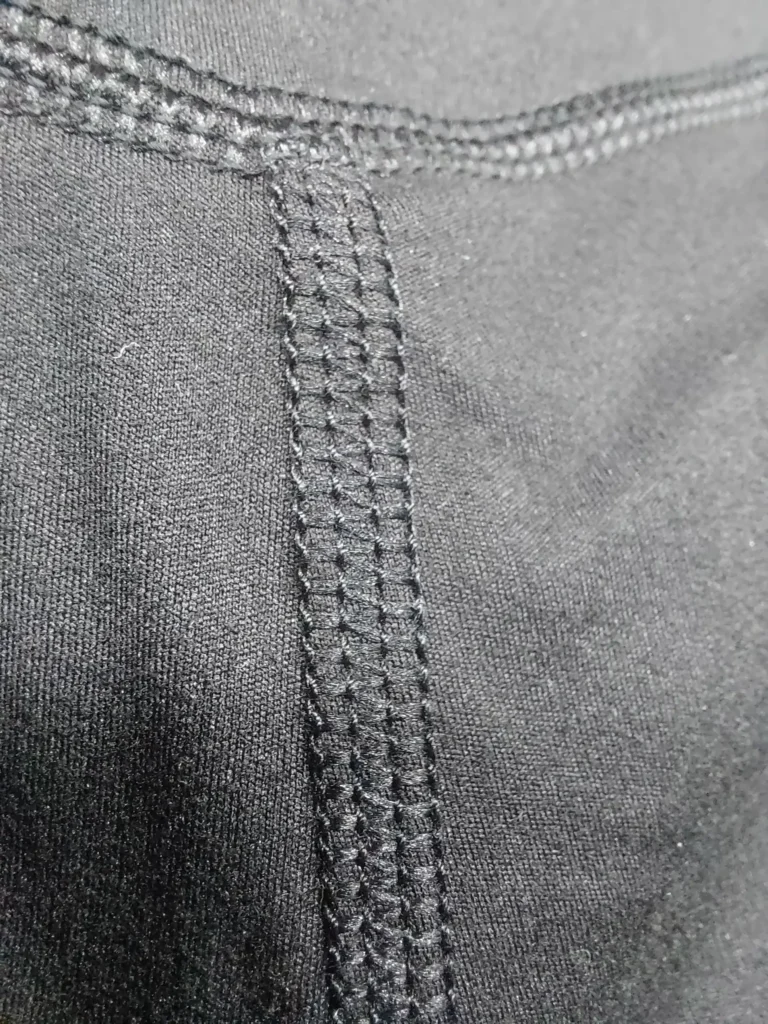
Nylon is one of the strongest synthetic fibres available. It resists abrasion significantly better than polyester — relevant for products like rashguards, MMA shorts, and cycling gear where the fabric is subjected to friction and contact.
For your brand: For standard gym wear and team jerseys, polyester durability is more than sufficient. For combat sports, cycling, and any product worn under physical contact conditions, nylon is worth the additional cost.
5. Sublimation and Print Quality
Polyester wins — and it is not close.
This is the most practically important difference for brands ordering custom printed activewear. Sublimation printing only works on polyester. The dye-sublimation process requires the dye to bond with polyester fibres specifically — it will not transfer correctly onto nylon or any natural fibre.
This means:
- Custom all-over printed jerseys, team kits, and sublimated rashguards must be made from polyester
- Nylon garments are limited to solid colours, panels, or applied branding (embroidery, heat transfer, screen printing)
For your brand: If your designs rely on all-over prints, gradients, or full-colour logos — you need polyester. If your design is solid colour with applied branding, nylon is available to you.
6. Cost
Polyester wins.
Polyester is consistently less expensive than nylon at the fabric sourcing stage. As a general rule nylon fabric costs 20–35% more than a comparable polyester blend. This cost difference flows through to your unit cost and ultimately to your retail margin.
7. UV Resistance
Polyester wins.
Polyester has good natural resistance to UV degradation. Nylon is more vulnerable to UV damage over time, which is why most outdoor performance gear uses polyester or requires a UV-protective treatment on nylon.
The Blends: What We Actually Recommend at GYMHUR
For Premium Leggings, Sports Bras, Crop Tops, and Fitted Tank Tops:
80% Nylon / 20% Spandex The standard premium blend. Delivers the buttery-soft hand-feel customers associate with high-end brands. Excellent stretch recovery, strong durability. Our recommended spec for brands positioning above the mid-market. For crop tops and tank tops with a built-in mesh liner, both the outer fabric and the liner are typically specified in the same fabric family for consistent stretch and wash performance.
For Mid-Market Leggings, Performance Training Tanks, and Gym Shorts:
85% Polyester / 15% Spandex The most common blend in the global activewear market. Cost-effective, excellent moisture-wicking, holds colour well through sublimation. Our recommended spec for brands launching at a competitive price point or ordering high volumes. Performance training tank tops and stringer vests in this blend can be fully sublimated for all-over artwork.
For Rashguards and Compression Wear:
83% Polyester / 17% Spandex (standard) or 80% Nylon / 20% Spandex (premium). Nylon works for solid-colour premium rashguards where abrasion resistance and skin comfort are the priority.
For Team Jerseys and Match Kits:
100% Polyester Micro-Interlock or Bird’s-Eye Mesh (140–160 GSM) The lightweight polyester mesh construction maximises breathability, keeps the jersey dry, and allows unlimited colour and print customisation.
For Heavyweight Hoodies and Sweatshirts:
Neither — heavyweight hoodies use cotton fleece or French Terry (300–500 GSM). Nylon and polyester are not the right fabrics for this product category. The same applies to ribbed cotton gym tank tops and oversized cotton tanks — these use cotton or cotton/spandex constructions, not synthetic performance knits.
Quick Reference: Nylon vs Polyester at a Glance
| Property | Nylon | Polyester |
|---|---|---|
| Hand-feel | Soft, silky, premium | Varies by finish — can feel slightly rougher |
| Moisture-wicking | Moderate | Excellent |
| Drying speed | Slower | Fast |
| Stretch recovery | Excellent | Good |
| Abrasion resistance | Excellent | Good |
| Sublimation printing | Not compatible | Essential for sublimation |
| UV resistance | Lower (needs treatment) | Good |
| Cost | Higher (20–35% premium) | Lower |
| Best for | Premium leggings, sports bras, crop tops, fitted tank tops, rashguards | Jerseys, team kits, performance training tanks, mid-market gym wear |
The Honest Answer: Which Should You Choose?
Choose nylon if:
- Your brand is positioned as premium and your retail price supports it
- Your hero products are leggings, sports bras, crop tops, or fitted tank tops
- Soft hand-feel is a core part of your brand promise
- Your designs are solid colour or use applied branding rather than all-over prints
Choose polyester if:
- You are launching at a competitive or mid-market price point
- Your designs involve sublimation, all-over prints, or full-colour patterns
- Your product is team wear, jerseys, or performance gear for high-intensity sports
- You need UV resistance for outdoor or swimwear applications
The most important thing is to decide before sampling, not after. When you submit your Tech Pack to us, include the specific fabric composition, GSM, and spandex percentage you want — or tell us your budget and positioning and we will recommend the right spec.
Ready to Specify Your Fabric?
At GYMHUR, we source nylon/spandex and polyester/spandex blends directly from certified mills — the same fabric suppliers used by global activewear brands. Whether you are ordering 50 pieces or 5,000, you get access to the same fabric quality at factory-direct pricing. For a full explanation of how GSM affects compression, opacity, and product performance, read our fabric weight guide.
Request a Manufacturing Quote — or WhatsApp us directly for a quick fabric recommendation.
Related reading:
- Custom Leggings Manufacturer — Nylon & Polyester/Spandex, MOQ 50 pcs
- Custom Sports Bra Manufacturer — Sewn & Heat-Bonded
- Custom Gym Crop Top Manufacturer — Built-In Bra Options, MOQ 50 pcs
- Custom Gym Tank Top Manufacturer — Men’s & Women’s, MOQ 50 pcs
- Custom Rashguard Manufacturer — BJJ, MMA & Surf
- Manufacturing Sportswear: Pakistan vs China
