How to Write a Tech Pack for Custom Sportswear (With Free Template)
Most tech pack guides are written by designers or sourcing agents. This one is written by the people on the other end — the factory that receives your tech pack and has to build your garment from it.
We see hundreds of tech packs a year at GYMHUR, ranging from a single reference photo with a note saying “something like this” to fully specced documents that let us quote and sample accurately on the first attempt. The difference between those two extremes is the difference between one sample round and four. This guide covers what actually needs to be in a tech pack, written from the side of the table that has to interpret it.
If you’d rather build one than read about one, our tech pack builder walks you through every field below and outputs a document a manufacturer can quote from directly.
What a tech pack actually is
A tech pack is the instruction document that tells a manufacturer exactly how to build your garment — not what it looks like, but how it’s constructed, what it’s made from, and to what tolerance. It is not a mood board, a Pinterest reference, or a single product photo with “copy this” written underneath.
The confusion usually comes from conflating a tech pack with a design sketch. A sketch shows what you want it to look like. A tech pack tells a factory how to make it look that way, repeatably, at scale, in every size you sell. Without one, the factory has to guess at the gaps, and they will guess in whatever direction is fastest and cheapest for them — not necessarily what you intended.
Why an incomplete tech pack costs you more than time
We covered this in detail in our breakdown of manufacturing costs but it’s worth restating here: a factory that receives a vague spec has to estimate. They estimate fabric weight, they estimate seam allowance, they estimate finish. Estimates that favour the factory’s convenience often don’t favour your product.
The practical cost is sample rounds. A clear tech pack typically gets a usable first sample in one round, maybe two if construction is technical. A vague one routinely takes three or four rounds to converge on what you actually wanted — and each round is $30–80 in sample fees plus $30–60 in shipping, each way, sitting idle for 10–21 days per round. A tech pack that’s right the first time can save you a full month and several hundred dollars before production even starts.
The sections every tech pack needs
1. Garment overview and flat sketches
Start with a clear front and back flat sketch — a clean line drawing, not a fashion illustration, showing every seam, panel line, and closure. If you can’t draw, a clearly annotated reference photo with notes on what to change is the next best thing. What you cannot skip is identifying every construction line on the garment; if a seam isn’t shown, the factory will place it wherever is standard for them, which may not match your intent.
2. Bill of materials (BOM)
This lists every physical component that goes into the garment: main fabric, lining if applicable, elastic, drawcords, zippers, labels, hang tags, and any trims. For each, specify the material, the supplier if you have one, and the exact placement. A BOM with “elastic” and nothing else leaves the width, type, and stretch percentage to the factory’s discretion.
3. Fabric specification
This is the section most tech packs get wrong, and it’s the one with the biggest downstream impact on fit, feel, and durability.
Specify the fiber composition (e.g. 78% nylon / 22% spandex), the fabric weight in GSM, and the finish (matte, brushed, shine). If you don’t know which composition suits your product, our Nylon vs Polyester guide breaks down the trade-offs, and our GSM fabric weight guide covers what weight suits which garment type. Leggings typically run 200–280 GSM; lighter performance tees run 140–180 GSM; heavier fleece for hoodies runs 280–360 GSM.
If durability and performance claims matter to your brand — moisture-wicking, four-way stretch, pilling resistance — say so explicitly and ask your manufacturer to confirm the fabric meets it. Our field tests for fabric quality article covers how to verify these claims rather than just take them on trust.
4. Measurements and points of measure (POM)
Every size you intend to sell needs its own measurement chart, with specific points of measure: waist circumference, inseam, rise, chest, sleeve length — whatever applies to the garment. Include a tolerance for each measurement, typically ±1cm depending on the garment. Without tolerances, you have no objective standard to hold a factory to if a finished batch comes in off-spec.
5. Construction details
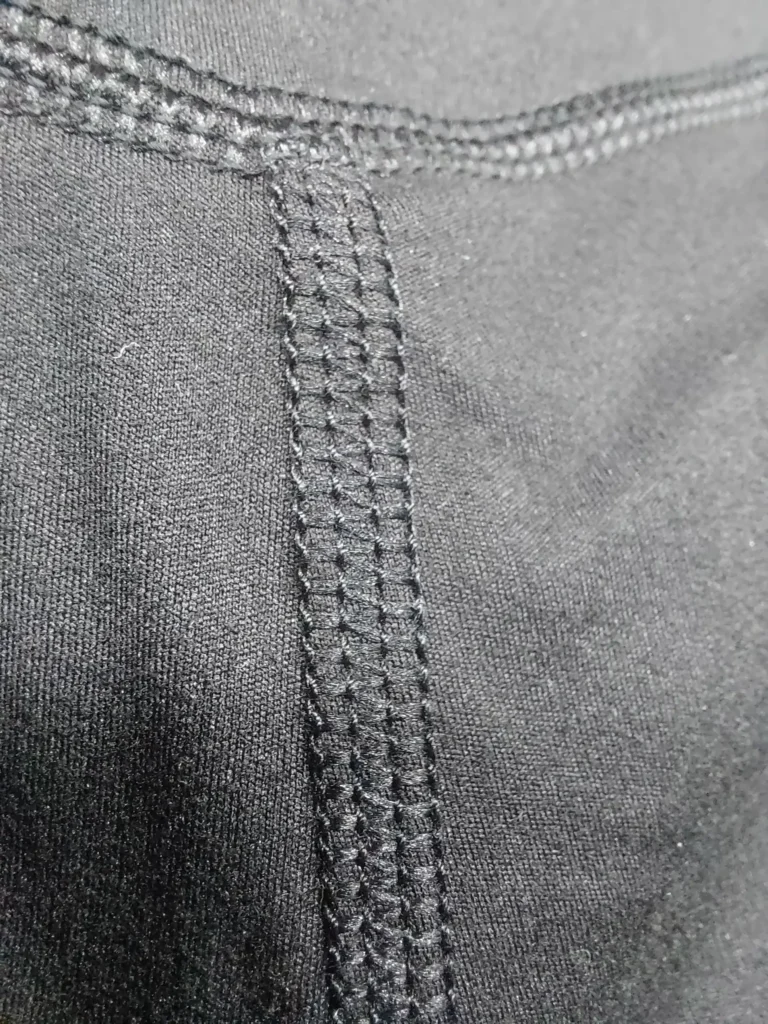
This covers how the garment is actually sewn: seam type (flatlock, overlock, coverstitch), stitch density, waistband construction (folded, exposed elastic, dual-layer), and any reinforcement at stress points. This is where activewear differs most from general apparel — a flatlock seam at a compression panel behaves completely differently from an overlocked seam, both in comfort against skin and in how it holds up to repeated stretching.
6. Branding and labeling
Specify logo placement with exact measurements from a reference point (not “on the chest” but “4cm below the centre back neckline seam”), the application method (heat transfer, embroidery, woven label, screen print), and size. Include care label content, country of origin requirement, and any size label specifications.
7. Colorways
List every colourway you want produced, ideally with Pantone references rather than a verbal description. “Navy” can mean six different shades to six different fabric suppliers.
8. Packaging instructions
How each unit should be folded, bagged, and labelled before it ships. This matters more than founders expect — unbagged garments arriving loose in a carton is a common and entirely avoidable problem.
Where activewear tech packs differ from combat sports tech packs
A tech pack for leggings or a hoodie is not the same document as one for a rashguard or a pair of fight shorts, and treating them identically is a common mistake we see from brands entering combat sports from a general activewear background.
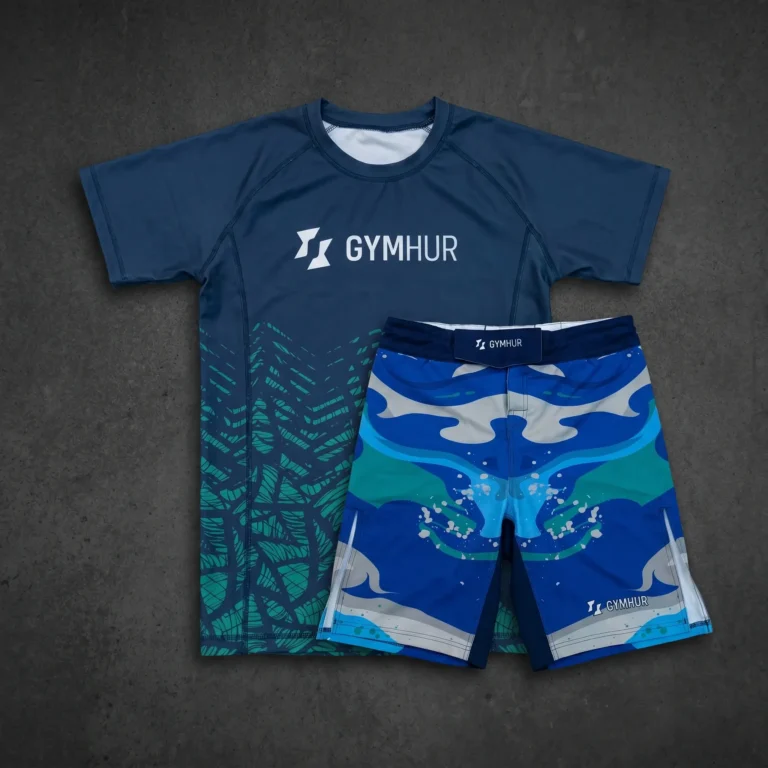
Rashguards need flatlock seams specified at every panel — a standard overlock seam will chafe under grappling friction in a way it never would on a legging. Panel construction also matters more: most rashguards use compression paneling that needs to be mapped out in the flat sketch, not left to the factory’s standard pattern.
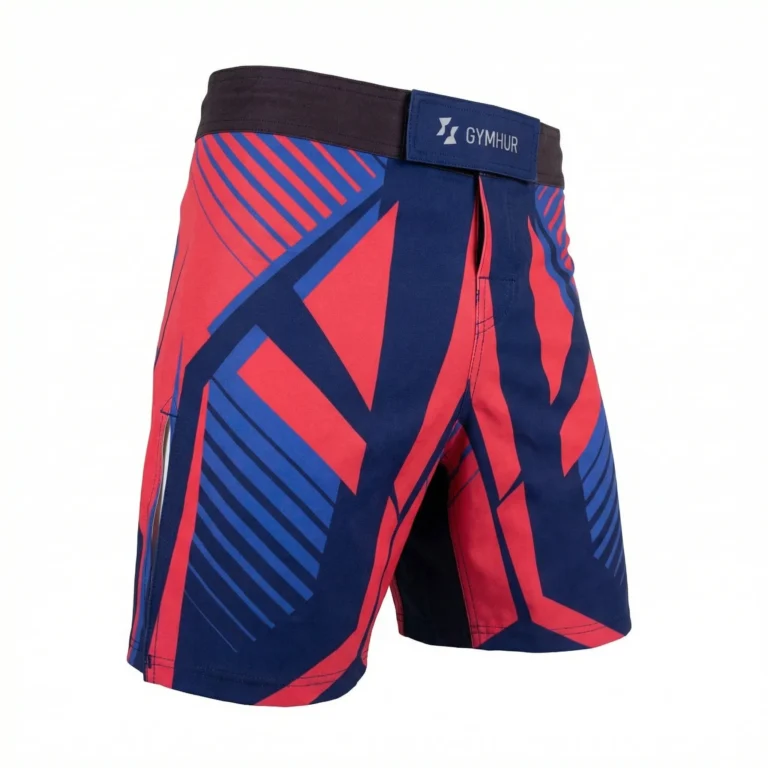
Fight shorts need split-side or gusseted construction specified explicitly for range of motion, plus reinforcement at the crotch seam — a stress point that sees far more load than the equivalent seam on gym shorts. Velcro or lace closure type and tensile strength should be specified, not assumed.
BJJ gi tech packs are their own category entirely, with weave type (pearl weave, gold weave, ripstop), GSM far higher than activewear (typically 450–550 GSM for the jacket), and reinforced stitching at grip points that a standard sportswear tech pack template won’t account for.
If you’re building a combat sports brand, treat the construction section of your tech pack as the most important part of the document, not an afterthought to the BOM. Our guide to starting a private label MMA and BJJ gear brand covers this in more depth.
Common tech pack mistakes that cost sampling rounds
Vague fabric descriptions. “Soft, stretchy fabric” tells a factory nothing usable. Give composition and GSM.
No tolerances on measurements. Without a stated tolerance, there’s no way to object to a finished batch that’s technically within the factory’s own standard but outside what you needed.
Logo placement described in words instead of measurements. “Centered on the chest” is interpreted differently by every operator on the line. Give a measurement from a fixed reference point.
One photo, no construction notes. A reference photo shows you what something looks like from the outside. It tells the factory nothing about seam type, panel construction, or fabric weight — all of which are invisible in a photo but determine whether the final product performs.
Treating the tech pack as a one-time document. A tech pack should evolve from initial concept through to final production spec. Lock in detail as you move through sampling rounds rather than expecting the first version to be final.
Using a tech pack builder vs. building one manually
You don’t need design software to produce a usable tech pack — a clear spreadsheet or document with the sections above is enough for most manufacturers to quote from. But a structured tool reduces the chance of missing a section entirely, which is the single biggest cause of sampling delays we see.
Our tech pack builder is free to use and structured around exactly the sections in this article, covering leggings, sports bras, hoodies, rashguards, and fight shorts specifically — not a generic apparel template retrofitted for performance wear. It’s built by the same team that quotes and samples from the documents it produces, so the fields ask for what we actually need to give you an accurate quote.
What happens after your tech pack is done
Once your tech pack is complete, the next step is sending it to a manufacturer for a quote and first sample. A complete tech pack lets a factory quote accurately rather than padding the price to cover unknowns — see our cost breakdown article for what that quote should actually include. If you’re earlier in the process and still defining your product and niche, our guide to starting a private label activewear brand covers the steps before this one.
Ready to start? Build your tech pack or send us what you have and we’ll tell you honestly what’s missing before you commit to a sample.
Frequently asked questions
What is a tech pack in clothing manufacturing?
A tech pack is the technical document that tells a manufacturer exactly how to construct a garment — covering flat sketches, bill of materials, fabric specification, measurements with tolerances, construction details, branding, colorways, and packaging. It functions as the production contract between a brand and a factory.
Do I need a tech pack to get a sample made?
Most reputable manufacturers won’t begin sampling without one, or will charge a premium to cover the uncertainty of working from incomplete information. A complete tech pack gets you a more accurate quote and typically reduces sampling rounds from three or four down to one or two.
What’s the difference between a tech pack and a spec sheet?
A spec sheet usually refers to just the measurement and tolerance section of a tech pack. A full tech pack includes the spec sheet plus flat sketches, bill of materials, construction notes, branding details, colorways, and packaging instructions — the complete document, not just one section of it.
How is a tech pack for rashguards different from one for leggings?
Combat sports tech packs need explicit seam type specification (flatlock over overlock to prevent chafing), compression panel mapping in the flat sketch, and reinforcement at stress points like the crotch seam on fight shorts or grip points on a BJJ gi. Generic activewear tech pack templates don’t account for these construction requirements.
Can I use a free tech pack template instead of building one from scratch?
A template is a useful starting structure, but most generic templates aren’t built for technical sportswear and miss fields like compression grading, seam reinforcement, or performance fabric specification. GYMHUR’s tech pack builder is structured specifically around activewear and combat sports construction.