How to Start a Private Label MMA and BJJ Gear Brand: Rashguards, Fight Shorts and Grappling Wear
Quick Answer: Starting a private label MMA or BJJ gear brand requires choosing your product range, finding a manufacturer who understands combat sports construction, developing a tech pack, and sampling before bulk production. The minimum realistic budget for a first run is $2,350–$3,500 for two hero products at 50 units each. Rashguards and fight shorts are the highest-margin entry points.
The MMA equipment market is worth $631 million in 2025 and growing at 6% annually. BJJ participation has roughly doubled since 2018 in the USA, UK, and Australia. There are hundreds of brands in this space, most of them mediocre — poorly fitted rashguards that curl at the hem after three washes, fight shorts with waistbands that slip in scrambles, gis with inconsistent sizing across runs.
That gap is the opportunity.
This guide is written by the people who manufacture the gear, not an affiliate blog ranking products we don’t make. We produce rashguards, fight shorts, BJJ gis, and grappling shorts from Sialkot, Pakistan for brands across the USA, UK, Europe, and Australia. What follows is what actually matters when starting a combat sports brand from scratch.
Why Combat Sports is a Better Entry Point Than General Activewear
The typical activewear market — leggings, sports bras, hoodies — is saturated with mid-market brands that compete almost entirely on price. Combat sports is different. BJJ practitioners and MMA athletes are tribal. They care about fit, fabric performance, and brand identity in a way that general gym-goers often don’t. A mediocre leggings brand gets ignored. A mediocre rashguard brand gets called out on Reddit and in gym group chats within weeks of launching.
That sounds like a risk. It’s actually the opposite. The community polices quality, which means genuinely good gear gets shared and recommended at a rate general activewear brands can’t match through paid media.
The other advantage: specificity. BJJ has IBJJF competition rules that dictate rashguard colours and construction. Gyms order in team sets. Academies want their own branded kit. There are multiple buyer archetypes — individual practitioners, gym owners, team managers, brand founders — each with different needs and order volumes. You can find a niche within a niche.
Step 1: Choose Your Entry Product
Quick Answer: Rashguards and fight shorts are the best entry products for a private label MMA or BJJ brand. They have the lowest manufacturing complexity, highest margin, and don’t require the fitting precision that BJJ gis demand.
The four main product categories in this market are:
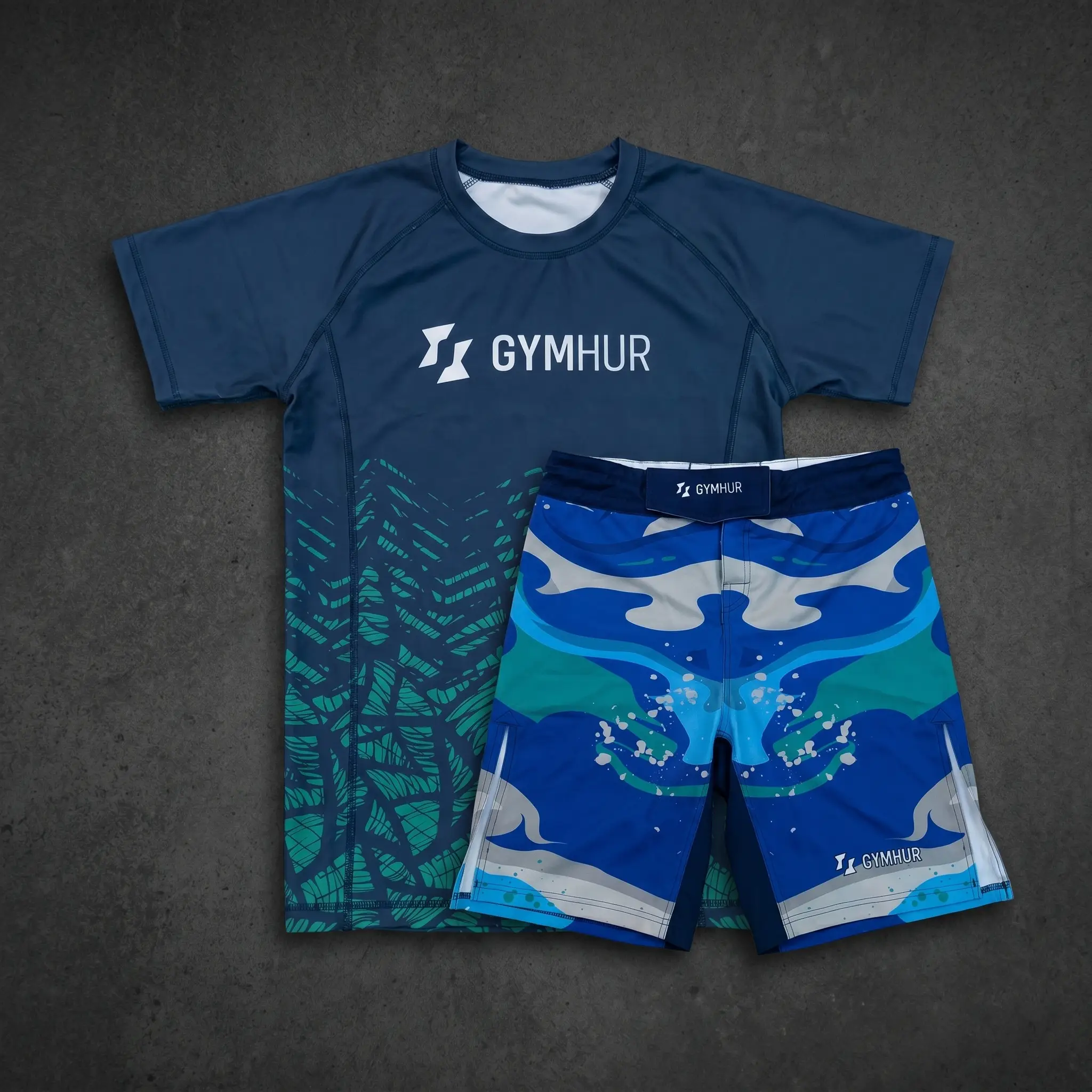
Rashguards — The most common starting point. Simple construction: two or three panels, flatlock stitching throughout, sublimation printing for full-colour designs. Standard blend is 83% polyester / 17% spandex. Competition rashguards need to be colour-coded (black, white, blue, red, or a combination of two) to meet IBJJF regulations for no-gi competition. This is worth knowing before you design.
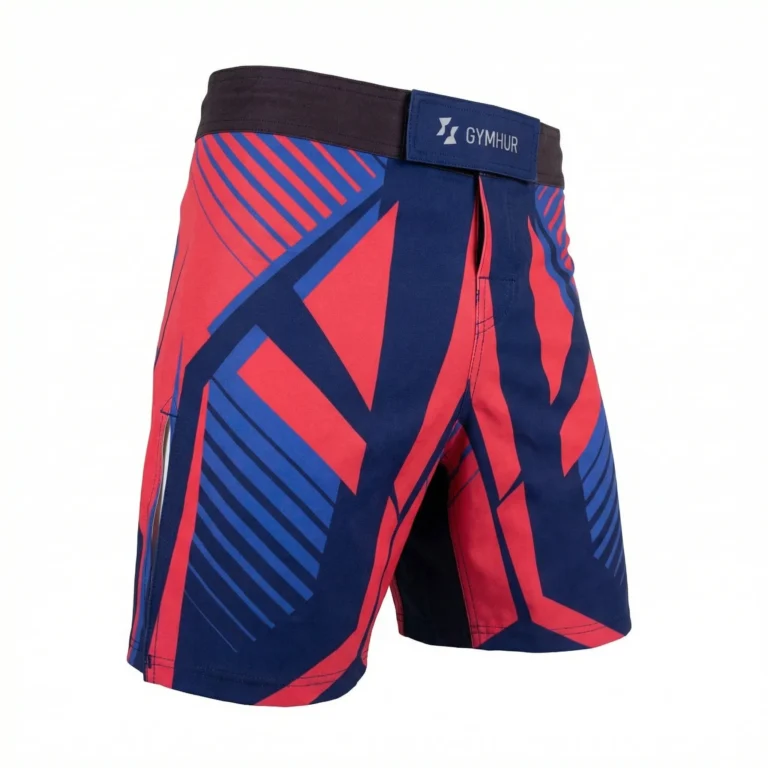
Fight Shorts / MMA Shorts — Higher construction complexity than rashguards but still accessible. Split seams or shark-cut side panels allow the leg mobility needed for high kicks and guard work. Waistband construction matters: a velcro-and-drawstring combination is standard for MMA; BJJ-specific grappling shorts often use an internal elastic waistband with a fixed outer shell. Sublimation or panel printing both work here.
Spats / Compression Shorts — Often sold as a set with rashguards. Same fabric construction as rashguards. Lower price point than rashguards but strong margin when sold as a bundle.
BJJ Gis — The hardest entry point by some margin. Sizing must be precise because the gi must meet IJF and IBJJF dimensional requirements. Fabric is cotton or a cotton/polyester weave (pearl weave, single weave, gold weave), not the synthetic blends used in rashguards. Embroidery is the primary customisation method. Leave gis until you have revenue and understand the market — start with no-gi gear.
The recommendation: rashguard plus fight shorts as your two hero products. They share a customer, often sell together, and give you a complete no-gi kit from the first order.
Step 2: Understand the Construction Requirements
Most activewear manufacturers can make rashguards and fight shorts. Not all of them make them correctly for combat sports use.
What to check for rashguards:
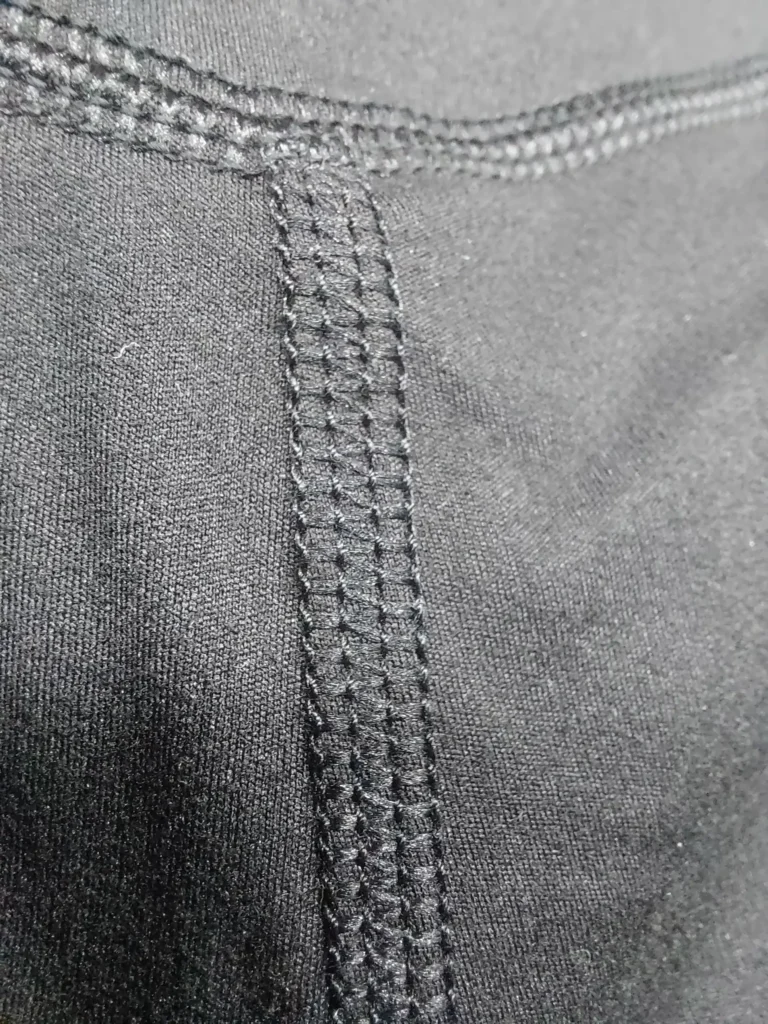
- Flatlock stitching throughout — standard overlock stitching creates a raised seam that causes mat burns and chafing under a gi. Flatlock is mandatory, not optional.
- Four-way stretch fabric — the garment needs to move in all directions. A fabric that stretches lengthways but resists lateral pull will tear at the shoulder during guard passing.
- Sublimation coverage to the seam edge — cheap sublimation leaves a white border at seams where the panels join. It looks bad and signals low quality immediately to anyone who trains.
- Reinforced collar — the neck opening takes significant tension in grappling. Single-needle collar stitching fails within months. Double or triple needle is the minimum.
What to check for fight shorts:
- Split seam construction — the inner leg seam needs a cut or a gusset to allow full hip flexion. Shorts without this will tear or restrict movement when the wearer takes guard or throws a head kick.
- Waistband security — the velcro closure must be fully covered by the drawstring flap to avoid scratching training partners. This is a gym etiquette requirement at most academies, not just a design preference.
- Fabric weight — fight shorts need enough structure to hold their shape but not so heavy they restrict movement. 140–180 GSM four-way stretch polyester is the standard range.
- Panel construction — the side panels or shark cuts that allow hip flexion should be cut from a stretch panel, not just a straight seam opening. Straight side slits look unfinished and provide less mobility.
This is where manufacturer selection actually matters. A factory that makes standard gym shorts can produce something that looks like fight shorts. It will not perform like fight shorts.
Step 3: Write a Tech Pack
A tech pack is the specification document your manufacturer works from. Without one, you are relying on verbal descriptions and hoping the factory interprets them correctly. This is where most first sample failures happen.
For rashguards, a tech pack needs:
- Panel layout and seam placement (with measurements)
- Fabric composition and GSM
- Collar construction detail
- Stitching type for each seam (flatlock throughout)
- Logo placement, size, and application method
- Colourway specifications (Pantone references or hex codes for sublimation)
- Size chart with measurements for each size
- Label placement and content
For fight shorts, add:
- Waistband construction detail (velcro width and placement, drawstring gauge)
- Split seam or gusset specification
- Liner or no liner, and liner fabric if applicable
- Pocket placement if included
Our free tech pack builder covers all the required fields for rashguards, fight shorts, and grappling shorts. If you don’t have design software, a detailed written spec with reference images is enough to get an accurate first sample from a competent factory.
Step 4: Choose Your Manufacturer
The fight wear manufacturing supply chain is concentrated in three places: Sialkot (Pakistan), Thailand, and China. Each has different strengths.
Sialkot, Pakistan is the most underrated source for combat sports apparel. The city has manufactured sports goods for export for over a century. Fight wear factories here are set up for full sublimation, cut-and-sew construction, and low MOQ orders. Costs are lower than Thailand and significantly lower than any domestic option. Pakistan’s GSP+ trade status means EU and UK buyers pay 0% import duty on textile goods — a meaningful margin advantage over sourcing from China.
Thailand has a strong reputation for Muay Thai gear specifically — shorts, gloves, shin guards. For BJJ rashguards and MMA fight shorts, the quality is good but prices are higher than Pakistan for comparable work.
China offers the lowest prices at high volume but MOQs at most factories start at 300–500 units per colourway. For a brand starting with 50–100 pieces, China is not the right starting point.
Questions to ask any fight wear manufacturer before committing:
- Can you show me existing rashguard samples with flatlock stitching throughout?
- What is your MOQ for sublimated products?
- Do you manufacture the sublimation in-house or subcontract it?
- What is your sample lead time, and will the sample use the same fabric as bulk production?
- Can you supply references from existing fight wear brands?
The last question matters. A general activewear factory that says yes to custom rashguards is not the same as a factory with an established combat sports production line.
Step 5: Sample Before You Scale
Two sample rounds is the realistic minimum for rashguards and fight shorts. Three is common if you are specifying technical construction details.
Round one sample should test fabric, fit, and construction. Put it through actual training. Roll in the rashguard. Shadow box in the shorts. Wash both five times. The most common first-round failures are collar stretch (the neck opening grows after washing), sublimation bleed at seam edges, and split seam mobility that turns out to be insufficient.
Round two sample addresses the corrections. If the factory has done round one properly, round two should be ready for sign-off.
| Item | Typical cost |
|---|---|
| Sample fee per piece | $30–60 |
| Shipping each way (DHL) | $30–50 |
| Per round, two pieces (rashguard + shorts) | $150–250 |
| Two rounds total | $300–500 |
Do not skip the in-person training test. A rashguard that looks correct on a hanger will reveal problems in a live roll that no inspection can catch.
Step 6: Price Your Products
Combat sports customers accept higher price points than general gym wear buyers, but they are informed consumers who know what quality costs. Pricing a rashguard at $70 when it performs like a $30 product is a faster path to failure than pricing it correctly at $35 with honest positioning.
Typical retail price ranges in the market:
- Budget rashguard: $25–45
- Mid-range rashguard: $45–75
- Premium rashguard (brands like Scramble, Tatami): $75–120
- Fight shorts: $40–80
- Spats: $35–60
Your manufacturing cost at 50–100 units from a Pakistani factory will typically be $8–15 per rashguard and $7–14 per pair of fight shorts, depending on construction complexity and sublimation coverage. At 200+ units the cost drops 20–30%.
A 2.5x to 3x markup on manufacturing cost is the minimum to cover branding, sampling amortisation, shipping, and a marketing budget. Below 2.5x you will not have the margin to grow.
Step 7: Position Your Brand in the Market
The brands that build loyal audiences in combat sports share one thing: they are clearly for someone specific.
Scramble built around grapplers who appreciate Japanese aesthetic and martial arts culture. 93Brand is New York street culture filtered through BJJ. XMARTIAL built around anime and pop culture crossover with the grappling community.
None of them tried to be for everyone.
Before you choose a design direction, spend time in the communities: r/bjj and r/MMA on Reddit, Instagram grappling accounts, YouTube academy channels. Find the gap between what exists and what people actually want. That gap is your positioning.
The gym supply channel is one of the fastest ways to build early volume. A single academy with 100 members that stocks your brand reaches 100 potential customers without paid media. Approach 10–15 gyms in your target market with a wholesale offer and free samples for the head coach. This is slow but it builds the kind of word-of-mouth that sustains a combat sports brand long-term.
What This Costs to Launch
| Item | Estimated cost |
|---|---|
| Tech pack (if outsourced) | $150–400 |
| Sample rounds (2 products x 2 rounds) | $300–500 |
| First production run (50 units each at ~$11/unit average) | $1,100 |
| Branding (labels, tags, polybag packaging) | $300–600 |
| Photography | $400–800 |
| Shipping to you | $300–500 |
| Total | $2,350–3,500 |
Frequently Asked Questions
What fabric is used for BJJ rashguards?
The standard blend is 83% polyester / 17% spandex or 80% polyester / 20% spandex. Nylon/spandex blends (80/20) are used in premium rashguards for softer hand-feel and better abrasion resistance — relevant for no-gi training where skin contact with the mat is constant. Polyester is required for sublimation printing; nylon rashguards are limited to solid colours with applied branding.
What is the minimum order quantity for custom rashguards?
MOQ varies by manufacturer. Most factories in Sialkot work from 50 pieces per design for sublimated products. Chinese factories typically require 300–500 units. If a manufacturer quotes below 30 units for a fully custom sublimated product, ask specifically what fabric they use for samples versus bulk — low MOQ often means stock fabric rather than custom production.
Do rashguards need to meet IBJJF regulations?
For competition use, yes. IBJJF rules specify that rashguards must be a solid colour (black, white, blue, red) or a combination of no more than two colours, with no logos larger than 36 square centimetres. For gym training and non-IBJJF competition, there are no restrictions. Design your rashguards with competition rules in mind from the start — it is significantly harder to retrofit a design than to build within the rules initially.
How long does production take for fight wear?
From confirmed order to dispatch: 3–5 weeks for production plus 5–7 days air freight from Sialkot to the USA, UK, or Australia. Total door-to-door is typically 4–6 weeks. Sublimation printing adds 3–5 days versus solid-colour production because each piece requires individual print preparation.
Can I start with gis instead of rashguards?
You can, but it’s harder. Gi sizing must meet IBJJF dimensional requirements and the fitting tolerance is tighter than no-gi products. Gi fabric (pearl weave, single weave) is cotton-based and requires different production skills than synthetic fight wear. Most successful gi brands started with no-gi products and moved into gis once they had an audience and revenue. Start where complexity is lower.
At GYMHUR, we manufacture custom rashguards, fight shorts, and BJJ gis from Sialkot, Pakistan. MOQ starts at 50 pieces. Samples in 14 days.
Request a quote or WhatsApp us directly for a fabric recommendation and pricing.
Related reading: