Cork Core vs PU Core Sliotars: What’s the Difference and Which is Better?
The debate over sliotar cores has been running in GAA circles for decades. Walk into any club dressing room before a championship game and someone will have a strong opinion about the ball. But most of that debate centres on brand preferences — Cummins vs O’Neill’s, ribs too high or too low — rather than the engineering question underneath: what is actually inside the ball, and does it matter?
It does. The core material is the single biggest determinant of how a sliotar performs off the hurl. This guide explains the two core types used in GAA-approved sliotars today, how they differ in construction and on-field behaviour, and which is the better choice depending on how and where you play.
What Is a Sliotar Core?
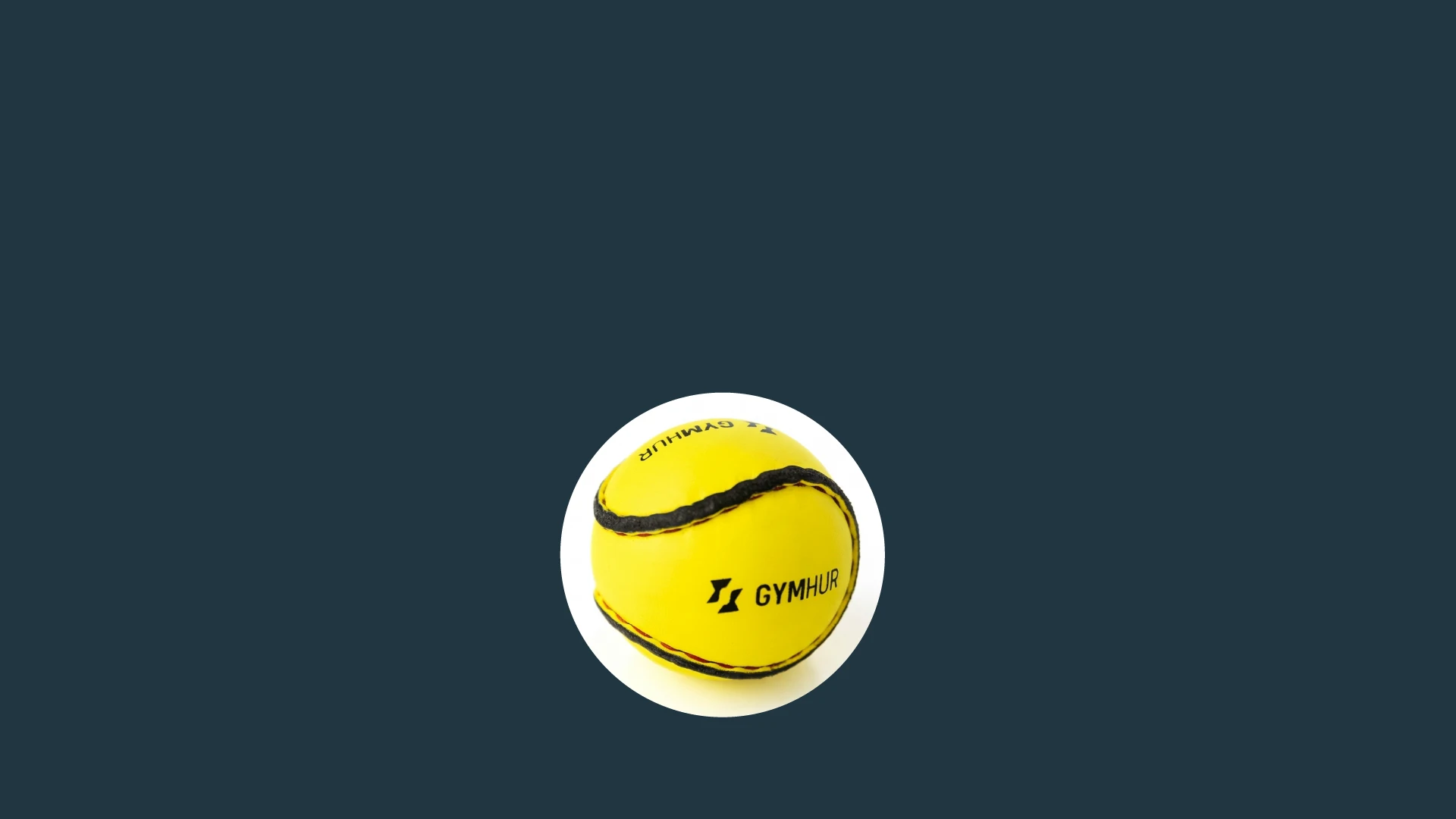
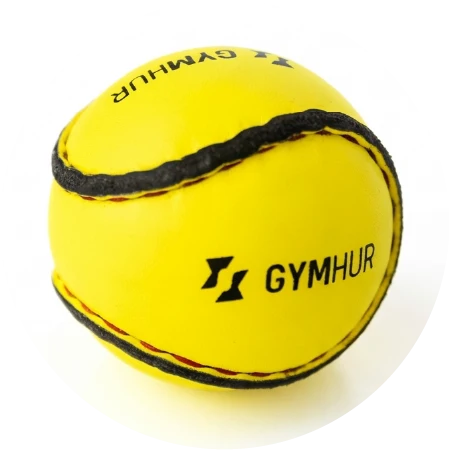
A sliotar is not a solid ball. It has two components: a core and a leather cover. The core is what gives the ball its weight, its rebound characteristics, and its feel off the stick. The leather cover — typically chrome-tanned or synthetic leather between 1.8mm and 2.7mm thick — is stitched over the core in two panels and contributes to grip and durability.
According to GAA specifications, an approved match sliotar must have a diameter of 69mm to 72mm (excluding the rib), weigh between 110g and 116g, and have a coefficient of restitution (bounciness) between 0.522 and 0.576 when dropped from 1.8 metres. What the specification does not mandate is the exact material the core is made from — only that the finished ball passes the performance tests. This is why two core materials currently exist in the approved supply chain.
Cores manufactured for GAA sliotars fall into two categories: the traditional cork wound with yarn, and the modern polymer foam core (typically polyurethane, abbreviated to PU). Both types can be found in GAA-licensed sliotars used at club level today.
Cork Core Sliotars: Construction and Characteristics
The cork core is the older and more traditional construction. A spherical cork centre — natural cork, compressed — is tightly wrapped in multiple layers of yarn winding. This yarn wrap controls the final diameter and weight, and gives the core structural integrity before the leather cover is applied. The process is largely manual and varies somewhat between manufacturers, which has historically contributed to inconsistency between batches and brands.
How Cork Performs
Cork is a naturally viscoelastic material — it compresses under impact and recovers, absorbing some energy in the process. This gives a cork-core sliotar a certain feel off the hurl: slightly softer on contact, with a more predictable trajectory in dry conditions. Players who have hurled with cork-core balls for years often describe the feel as more natural, though this is partly habituation.
The limitation of cork becomes apparent in wet conditions. Cork absorbs moisture over the course of a match, which increases the ball’s weight beyond specification and changes its flight characteristics. A waterlogged cork-core sliotar is heavier, travels shorter distances, and bounces differently than it did at throw-in. In heavy rain — which describes a significant portion of the Irish hurling calendar — this is a meaningful performance variable.
Cork cores are also more susceptible to damage over time. Repeated high-speed impacts compress the cork permanently, and the yarn winding can shift after heavy use, creating slight asymmetry in the core. For match use this is generally controlled through ball rotation, but for training use it means shorter ball lifespan.
PU Core Sliotars: Construction and Characteristics
Polyurethane (PU) foam cores are the more modern alternative. PU is a synthetic polymer that can be engineered to precise density and elasticity specifications by varying its chemical composition during manufacture. Rather than being assembled from wrapped layers like a cork core, a PU core is moulded as a single homogeneous unit. This manufacturing consistency is one of its primary advantages.
Mycro Sport, one of the most widely used GAA-licensed manufacturers, uses PU cores across their full range of approved sliotars. The adoption of PU across licensed manufacturers has accelerated since the GAA introduced its formal sliotar licensing and standardisation programme, which began in earnest in 2021 and has involved 67 meetings of the Hurley and Sliotar Regulation Work Group.
How PU Performs
PU foam is significantly more water-resistant than cork. Where a cork core will absorb moisture during play, a closed-cell PU core does not. This means the ball maintains its specified weight and performance characteristics across wet conditions — a meaningful advantage for most inter-county and club games played in Ireland and abroad.
The trade-off is feel. PU cores tend to be slightly firmer and more uniform in their rebound. Some experienced players describe PU-core sliotars as harder on the hands and more sensitive to mis-hits. The coefficient of restitution is tightly controlled in the manufacturing process, which produces a more consistent bounce but one that feels livelier to players accustomed to cork.
Research commissioned by the GAA and conducted in partnership with Dublin City University (DCU) — which independently tests all approved sliotars — found that PU cores produce a slightly shorter contact time on impact compared to cork cores. This means the ball leaves the hurl fractionally faster. In competitive hurling at pace, this difference is small but detectable to elite players.
Side-by-Side Comparison
| Property | Cork Core | PU Core |
|---|---|---|
| Construction | Natural cork + yarn winding (layered, manual) | Moulded polymer foam (homogeneous, consistent) |
| Wet weather performance | Weight increases as cork absorbs moisture | Maintains specification weight in rain |
| Feel off the hurl | Slightly softer, more forgiving on contact | Firmer, more responsive, higher rebound speed |
| Consistency batch-to-batch | More variable due to manual construction | Higher consistency from moulded process |
| Durability (training use) | Cork compresses permanently with heavy use | More durable under repeated high-speed impact |
| GAA approval | Yes, in licensed products | Yes, in licensed products |
| Use in Smart Sliotar programme | Yes (some licensed brands) | Yes (some licensed brands) |
What the GAA’s Standardisation Programme Changed
For most of hurling’s history, sliotar quality was inconsistent. The ball’s core material, manufacturing tolerances, and performance characteristics varied significantly between brands and even between production runs of the same brand. A 2014 test comparing then-approved brands found one ball travelling an average of 11 yards further than another under identical conditions — a difference large enough to affect free-taking and puck-out strategies.
The GAA’s Hurley and Sliotar Regulation Work Group, established in June 2021, introduced a formal licensing system that changed this. All approved sliotars — whether cork or PU core — must now pass independent lab testing at DCU and field testing at the National Games Development Centre in Abbotstown. The SMART Sliotar programme embedded a microchip into the core of inter-county match balls to verify authenticity and traceability. From January 2024, all games from Minor (Under-17) upwards use the fluorescent yellow/high-vis sliotar standardised under Pantone 388.
The practical effect of this programme is that the performance gap between cork and PU cores — in approved, licensed sliotars — has narrowed significantly. Both must hit the same coefficient of restitution window. Both must weigh within the same range. The material difference still exists in feel and wet-weather behaviour, but the wild variation between unregulated products that characterised the pre-2021 market has been substantially addressed.
Which Core Is Better for Match Play?
For inter-county and senior club competition, the sliotar is supplied by the match organiser from the approved SMART Sliotar list, so the choice is made for you. The relevant question for most clubs is which core type to use for training and which to buy for underage and junior match play.
For matches played in wet conditions — which is to say, most of the Irish domestic season — PU core sliotars have a practical advantage. The ball maintains its weight specification and does not become waterlogged. For clubs in the UK, North America, and Australia where games may be played on harder, drier surfaces, the choice is less clear and comes down to player preference.
For training, PU core sliotars generally offer better value. They are more durable under the high volume of impacts that training sessions generate, hold their shape longer, and are less affected by variable weather conditions across the season.
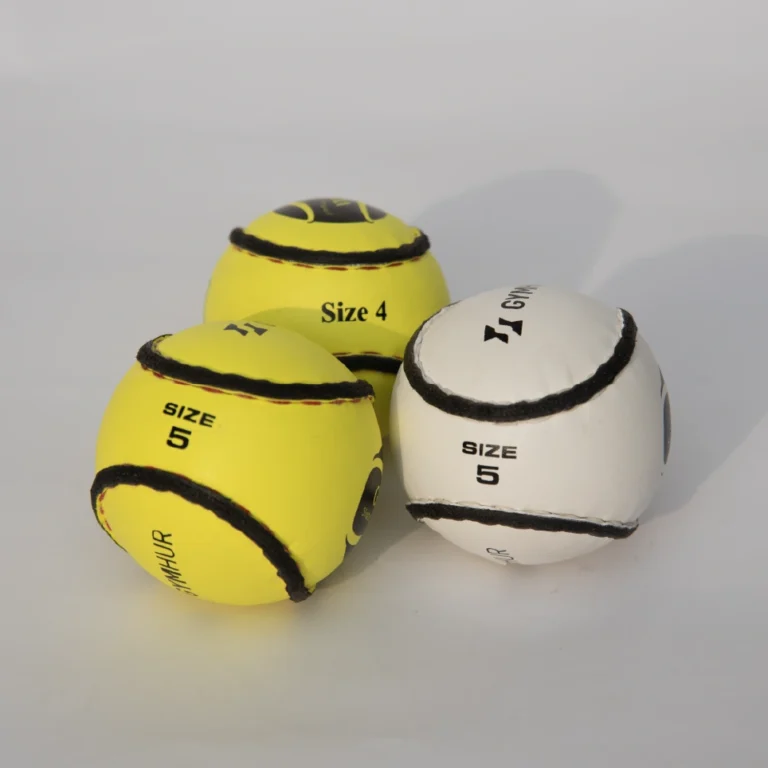
For underage development, lighter and softer versions of both core types exist. The GAA’s Go Games sliotars for younger age groups (Size 1 and Size 2) are engineered to be lighter and less hard than adult match balls — a safety and skills-development consideration that matters more than core material type at that level.
Which Core Is Better for Training?
Training with a ball that matches the match ball as closely as possible is the standard coaching recommendation. If your club’s inter-county or senior matches are played with SMART Sliotars that use PU cores, training with PU-core balls is the logical choice for senior squads. The consistency of the moulded PU core means players can develop reliable strike mechanics without accounting for ball-to-ball variation.
For juvenile coaching, the priority should be approved, correctly-sized sliotars at appropriate weight — the GSM-equivalent of sliotar specification. A lighter ball that a young player can strike cleanly will develop better mechanics than a heavy adult ball, regardless of core material.
What About the Rubber Core Experiment?
For completeness: in the early 2000s, the GAA trialled sliotars with rubber cores as a potential alternative to cork. The experiment was abandoned after testing found that rubber cores produced a more unpredictable bounce and caused the ball to travel faster than expected in wet conditions. The trial did not progress. Neither rubber-core nor any other non-standard core material appears in the current approved licensee list. The market today is cork and PU.
Frequently Asked Questions
Are PU core sliotars GAA approved?
Yes. Multiple GAA-licensed manufacturers produce sliotars with PU cores that meet full GAA specifications for match use. All licensed sliotars — cork or PU — must pass independent testing at Dublin City University before approval.
Can you tell the difference between a cork and PU core sliotar by feel?
Experienced players generally can, particularly off the hurl. PU cores tend to feel firmer and have a slightly crisper rebound. Cork cores feel marginally softer on contact. The difference is more pronounced in wet conditions, where a cork-core ball will feel heavier as the match progresses.
Which core type do county teams use?
Inter-county match balls are specified and supplied under the GAA’s SMART Sliotar programme. The GAA publishes an annual list of approved Smart Sliotar licensees, and both cork and PU core products appear in that list depending on the manufacturer. The specific ball used in any given championship match is determined by the competition organiser, not the county.
Do PU core sliotars last longer than cork core?
Generally, yes. PU foam is more resilient to permanent compression than natural cork under repeated high-speed impacts. For training use — where a single ball may be struck hundreds of times per session — PU core sliotars typically outlast cork core equivalents, making them better value at volume purchasing.
Are there safety differences between cork and PU core sliotars?
At the inter-county and adult club level, both core types must pass the same GAA hardness and coefficient of restitution specifications, so safety characteristics are regulated to be equivalent. For underage play, the age-appropriate sizing (Size 1, 2, 3, 4) matters significantly more than core material — a correctly-sized, weight-appropriate ball is the primary safety and development consideration.
Buying Wholesale Sliotars for Your Club
For GAA clubs sourcing sliotars at volume — whether for training, underage match play, or club cresting — the core type is one specification among several to consider alongside size, GAA approval status, and cost per ball at your required quantity.
If you are sourcing wholesale sliotars for your club and want to understand the full procurement picture — including how to buy in bulk, what to look for from a manufacturer, and how crested sliotars are produced — our complete guide to buying wholesale sliotars for GAA clubs covers the full process.
For clubs that want to understand the manufacturing process behind the ball itself — how cores are constructed, how the leather cover is applied, and what the GAA’s quality control process involves — the Engineering of a Sliotar covers the material science and production standards in detail.
To understand why fabric weight and material specification matter across all GAA equipment — not just the ball — our GSM fabric weight guide explains how material specifications affect performance and durability across sportswear.
GYMHUR manufactures GAA sliotars for club and wholesale supply from Sialkot, Pakistan. If you are sourcing wholesale sliotars for your club or need a quote for custom crested match balls, contact us directly for pricing and lead times.